
MES / MOM
Manufacturing execution systems built around the result you need
Quariq implements manufacturing execution and operations management systems (MES/MOM), from the first site to full rollout.
MES / MOM
Quariq implements manufacturing execution and operations management systems (MES/MOM), from the first site to full rollout.
Challenges
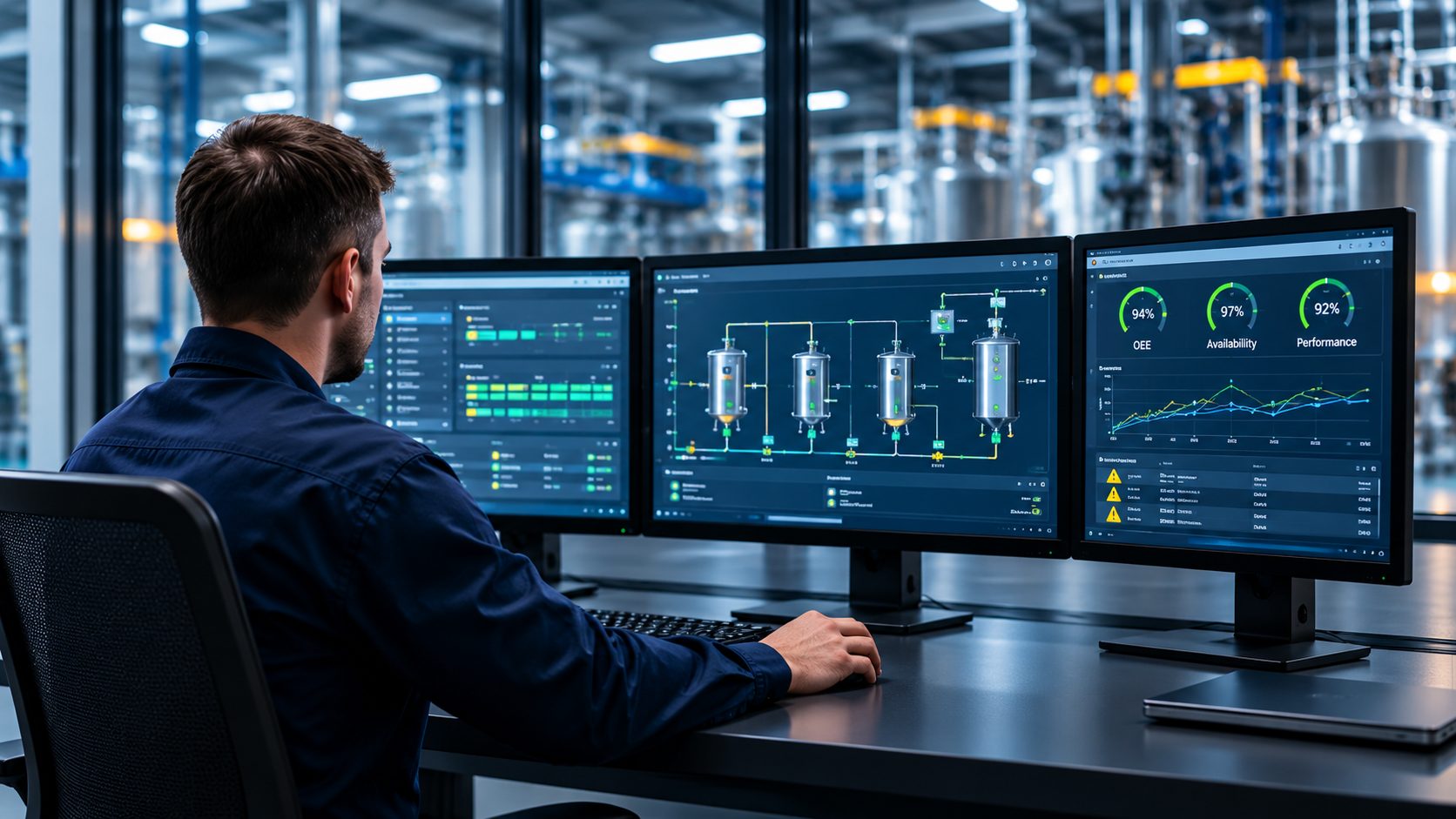
Batch records, checklists and logbooks are filled in by hand, then retyped, checked and filed.
ERP says what to make. The shop floor works from spreadsheets, whiteboards and memory.
One plant's MES was customised so heavily that the next site has to start again.
Selection started with features, so nobody can say which KPI the MES was meant to move.
An MES is worth what it changes on the line, not what it offers on a feature list. Projects stall when the system is chosen first and the result is sought afterward. Reverse that order and the second site gets easier too, because the template is built around the same result.
What we deliver
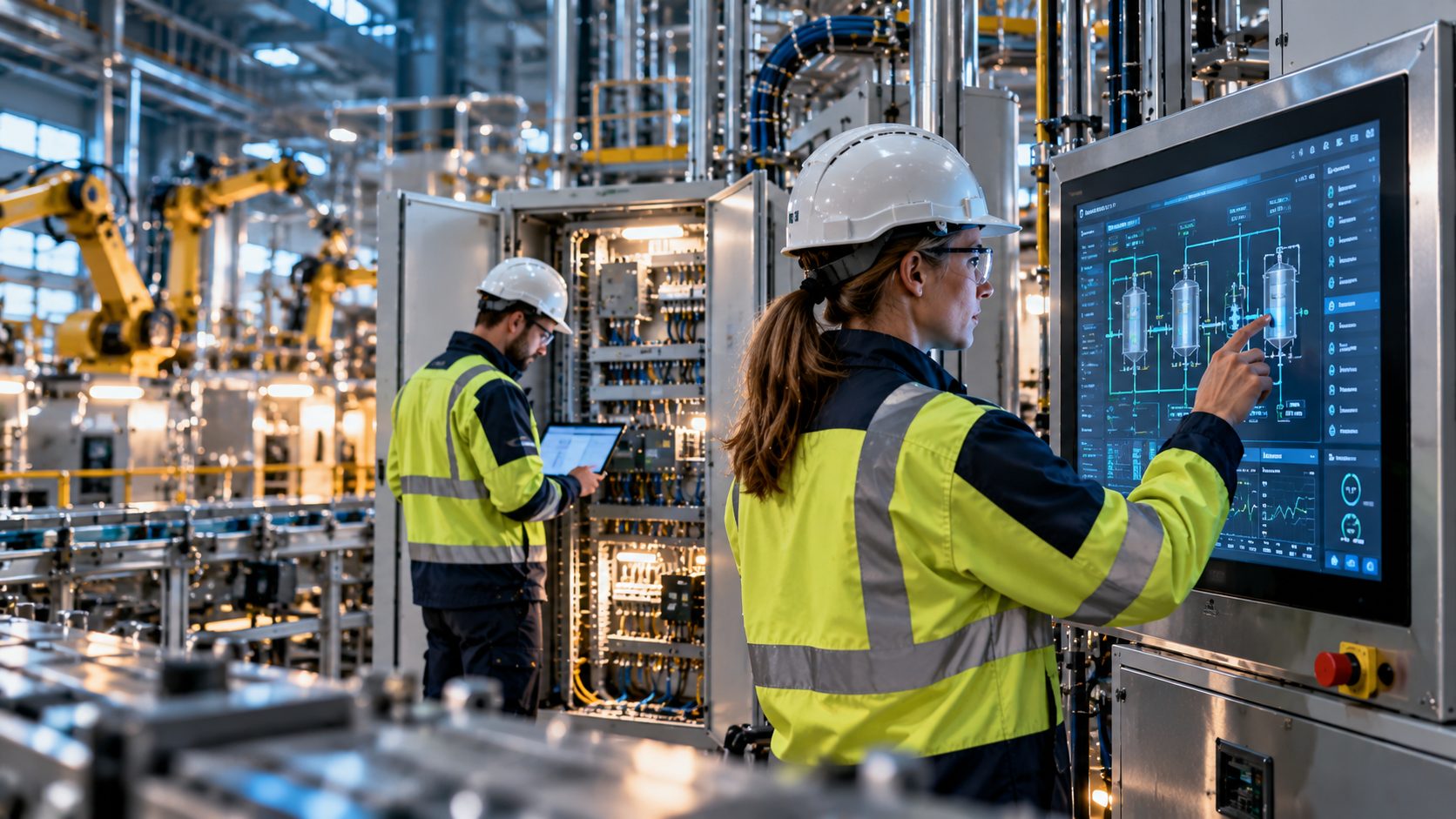
Digital work instructions at each station, with the right version for every product and step.
Every material, lot, step and check recorded, so a quality event stays contained to what it touched.
Orders, recipes and engineering changes reach the floor. Actual production flows back without retyping.
A core model with local variations kept small, so each new site starts from a tested standard.
We keep the systems that work, connect what runs in isolation, modernise or replace what blocks the result, and add MES functions step by step.
Before and after
In regulated production, the batch record is where paper costs the most time, and where an electronic batch record (EBR) changes the most.
On paper
With MES
Technology independence
Quariq isn't tied to a single MES. Sofyne and Manufacture Next, both Quariq companies, specialise in MES/MOM on different leading platforms, so the recommendation can follow your needs. The choice rests on four questions:
How it connects
Execution is where the factory of the future becomes routine: plans, people and machines working from the same record.
Questions manufacturers ask
MES runs execution on the shop floor: orders, steps, records and traceability. MOM is the wider scope around it, adding quality, maintenance, inventory and performance management. Most projects start with MES functions and extend into MOM as the operation matures, so we plan them as one programme.
Only if it moves a number you care about. We agree a baseline and a target first, for example batch release time, first-time-right or the effort spent preparing audits, and size the first phase to reach it. If the case doesn't hold, a smaller digital step may serve you better, and we say so.
Not necessarily. If the current system is stable but under-used or poorly connected, extending and integrating it is often the faster path. We recommend replacement only when the platform blocks the results you need or can't be supported across sites.
With a core template: one standard model for processes, data and interfaces, proven at a pilot site, then deployed site by site. Local variations stay limited to what each plant really needs, and every rollout feeds lessons back into the template.
ERP sends orders and materials. PLM sends product definitions, recipes and engineering changes. The MES executes and sends back actual consumption, output, quality results and genealogy. We design these interfaces at the start, because they decide how much manual re-entry remains.
When it makes their shift easier. We map the work as it is done today, involve operators in designing screens and instructions, and test them on the line before go-live. If a step takes longer with the MES than on paper, we redesign it.
Let's talk
Bring one result you need from production and the place where paper or disconnected systems slow it down. Our MES/MOM team will sketch where an MES would start and what a first phase involves.
