Chemicals

How a European chemical manufacturer predicts reactor scaling up to six months ahead

Scaling forced a reactor to stop for cleaning at moments nobody chose. An AI model running on the plant's AVEVA PI data now flags it months in advance, so the stop can be planned.

  • 6 monthsup to six months to plan the maintenance
  • 181variables tracked on the reactor
  • ~30of the most critical variables used for anomaly detection

At a glance

  • Customer

    A European chemical manufacturer

  • Services

    AI, Data

  • Starting point

    Digital integration: real-time reactor data in AVEVA PI, but scaling-related shutdowns still came unplanned

  • Where they wanted to go

    Data-driven production: scaling predicted early enough to plan maintenance on the company's own terms

  • Result

    Anomaly alerts up to six months ahead, maintenance scheduled into planned shutdowns, and insight into what drives scaling

  • Delivered by

    AG Solution, a Quariq company

Where they were

A rare stop with a large cost

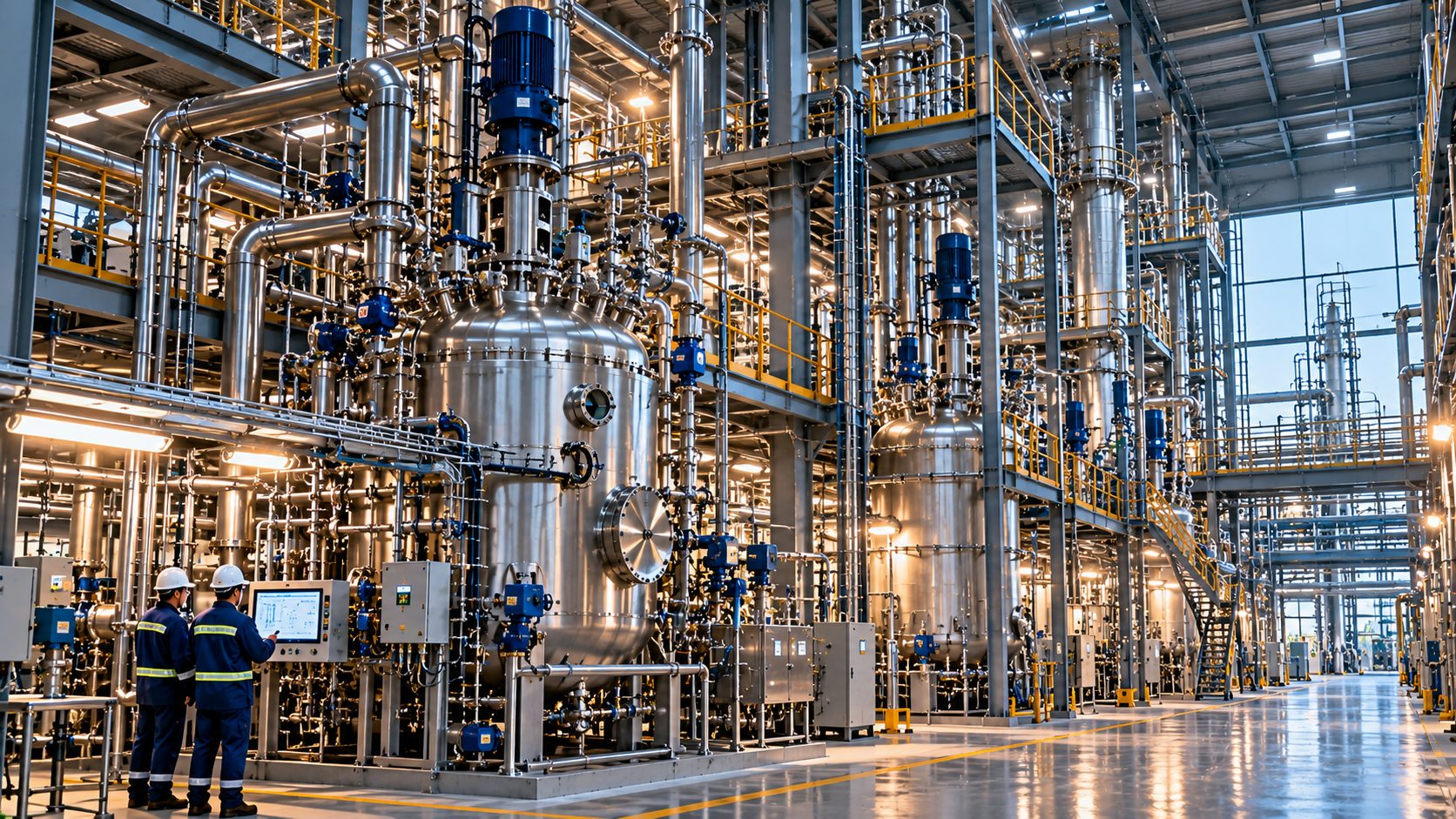
In one of the manufacturer's processes, scaling (unwanted material accumulating on the reactor's surfaces) gradually reduces efficiency until the reactor must stop completely for cleaning and maintenance.

These stops are infrequent, but each is costly, and an unplanned one disrupts the whole operation. Without knowing when the next would come, the company found it hard to keep the risk of rising costs under control.

Where they wanted to go

Shutdowns on its own terms

The aim was not to stop cleaning the reactor. Scaling would always need it. The aim was to choose when: ideally months ahead, so maintenance could be planned into a scheduled stop and the number of unplanned ones brought down.

The data to do it was already there. AVEVA PI collected real-time values from the reactor, indicating digital integration. The next step on the way to the factory of the future was to make that data warn the team in time to act: data-driven production.

The challenge

181 variables, and no obvious signal

The PI system tracks 181 variables on the reactor, from temperatures and pressures to water injection rates. Scaling builds up slowly, and with so many values moving at once, its early signs are hard to see.

The task was to find the indicators that matter, and to read them early enough to be useful.

What we did together

Anomaly detection on the variables that matter

We connected to the plant's AVEVA PI system to work with the reactor's real-time data.

To cut through the volume, our team narrowed the 181 variables to around 30 of the most critical ones. On those, we built an anomaly detection algorithm using Isolation Forest, a machine-learning method suited to spotting unusual patterns without a library of past failures to learn from.

When the model detects an anomaly, it notifies the team via AVEVA PI and email that a scaling problem may be imminent. That gives them up to six months to plan the maintenance.

Results

Planned stops instead of surprises

The reactor's key variables are now continuously monitored, so early signs of scaling are detected before they become critical. With maintenance moving from reactive to proactive, cleaning can be scheduled during planned shutdowns, avoiding interruptions and helping the plant consistently meet its production targets.

The model also shows which parameters contribute most to scaling. That gives process engineers a lead on its causes, not only a warning.

What other manufacturers can take from this

The rarest stops are often the ones worth predicting

Predictive maintenance is usually pitched at frequent failures. This case shows the value at the other end: a stop that comes rarely but costs a lot each time. The point is not to clean less often, but to choose the moment.

Any process with slow build-up fits the pattern, from deposits in evaporators in food processing to membrane clogging in water treatment. And a model that shows which variables drive the anomaly gives engineers something to work on, so the next step can be fewer stops, not only better-timed ones.

Transformation in practice

AI

How LANXESS gets real-time pH from an AI soft sensor

Read the story

AI

How Tersa used AI to cut soot blowing by 35%

Read the story

View all stories

Let's talk

Talk with our industrial AI team

Is there a stop in your plant that always comes at the wrong moment? Tell us about it, and we'll check whether your historian data can see it coming.

Talk with our industrial AI team