Sanofi · Pharmaceuticals

How Sanofi uses a golden batch to guide every production run

Sanofi wanted every batch to match its best. A golden batch profile, built from the process's own history, now shows operators in real time when a run starts to drift and what to adjust.
At a glance

  • Customer

    Sanofi, pharmaceutical batch production

  • Services

    Data

  • Starting point

    Digital integration: process values recorded over time, but no reference for what an ideal batch looks like while it runs

  • Where they wanted to go

    Data-driven production: every batch guided in real time towards the conditions of the best one

  • Result

    Lower costs and waste, higher yield, better energy efficiency and more consistent quality

  • Delivered by

    AG Solution, a Quariq company

Where they were

Good batches, but not every time

In batch production, the aim is a perfect batch every time: raw materials put to their best use, an efficient production time, high quality and as few errors as possible. Sanofi, like many pharmaceutical manufacturers, wanted exactly that.

The difficulty is that many variables shape a batch, and their effect on quality builds up over time. The conditions that once produced an ideal batch drift away, and that drift is hard to see while a batch is still running.

Where they wanted to go

Every batch run against the best one

Sanofi wanted to capture what its best batches had in common and use that insight to steer every new batch in progress, rather than learning after the fact.

The process data to do this was already being recorded. Turning it into guidance on the line is the step from digital integration to data-driven production, the third of the four stages towards the factory of the future.

The challenge

Knowing which variables matter, and when

A batch process records far more values than anyone can watch. The work was to identify the few variables that determine whether a batch turns out ideal, and to describe how each should behave throughout the batch, not just where it should end up.

What we did together

From recorded history to a time-based profile

Our data specialists started from the process values recorded over time. Analysing them showed which variables are critical to an ideal batch.

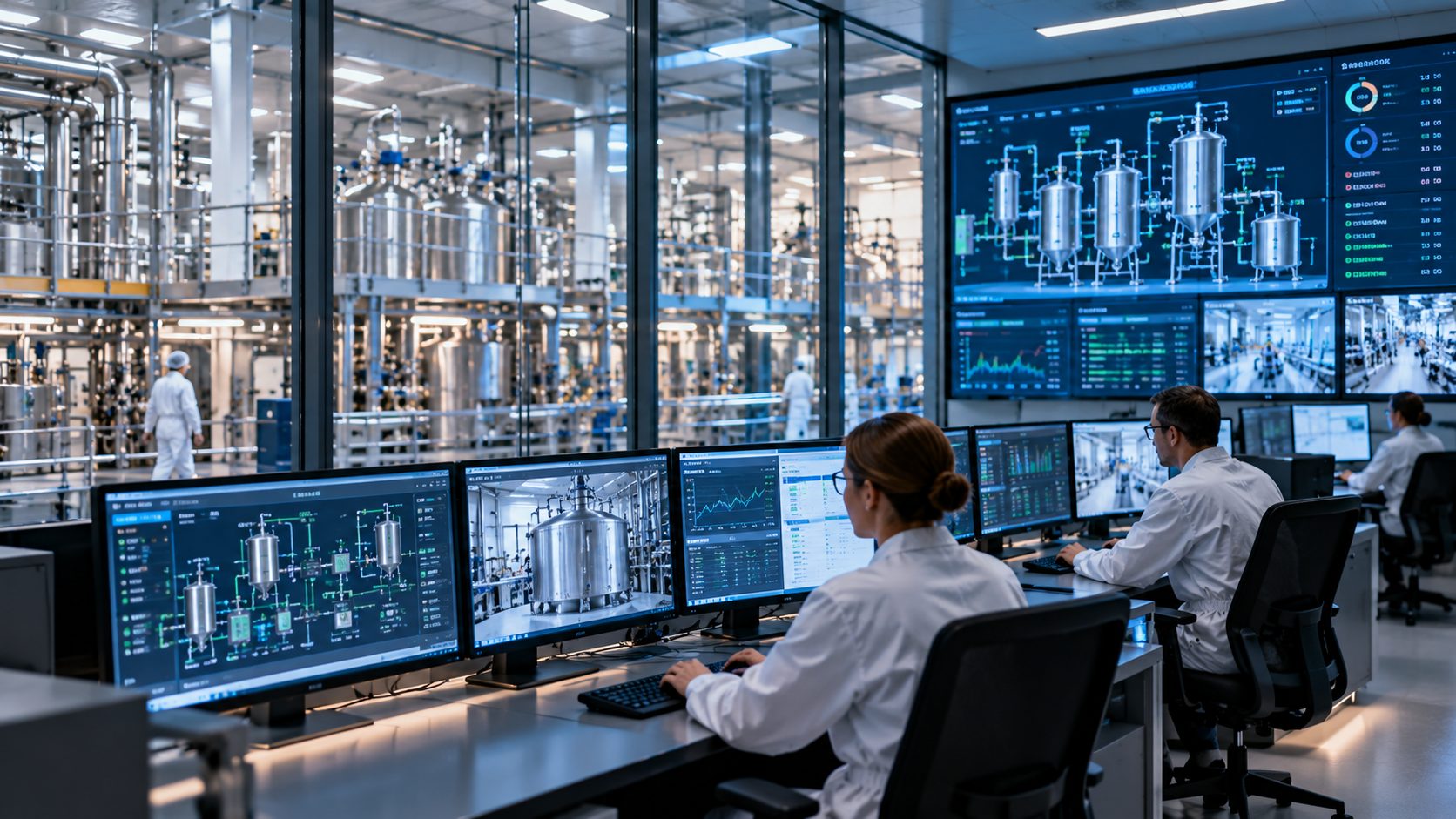
That analysis produced the golden batch: a time-based profile of how each critical variable should evolve from the start to the end of a batch. As a batch runs, the system compares the live values against the profile and prompts the operator for any necessary adjustments.

The operator stays in control, and the profile shows when and where to act.

Results

Less waste, better yield, more consistent quality

The golden batch has reduced costs and waste and improved yield, performance and energy efficiency. Process and product quality have improved too, in line with the standards the pharmaceutical industry demands.

What other manufacturers can take from this

Your best batch is already in your data

Every batch process has a best run on record, in pharmaceuticals but also in brewing, dairy, speciality chemicals and cosmetics. A golden batch turns that record into a reference that each new batch is measured against while it runs.

What it needs is history good enough to analyse and a clear view of which variables matter. It usually needs no new equipment. And because the system advises and the operator acts, it suits processes where people must stay in charge of every change.

Transformation in practice

Automation

How Dara-Lyo built 21 CFR Part 11 compliance into every freeze-dryer it delivers

Read the story

AI

How LANXESS gets real-time pH from an AI soft sensor

Read the story

View all stories

Let's talk

Talk with our data team

Tell us which batch process you want to make more consistent. We'll check whether your recorded data can produce a golden batch profile you can steer by.

Talk with our data team